How to Become a Real Estate Agent: Step-by-Step Guide
Published: 08 Oct 2026
Becoming a real estate agent can be an attractive career choice for people who enjoy working with clients, negotiating deals, studying property markets, and building professional relationships. To understand the profession properly, it helps to first learn what is real estate and how the property industry works. Real estate agents help buyers, sellers, landlords, and tenants navigate property transactions and connect people with suitable properties.
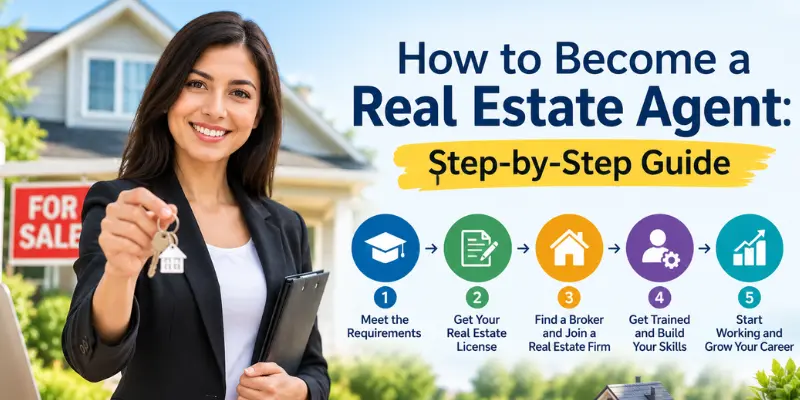
If you are searching for how to become a real estate agent, the exact process depends on where you plan to work. Real estate licensing, education, examinations, background checks, professional registration, and renewal requirements vary between countries, states, provinces, and other jurisdictions. In the United States, for example, every state requires real estate brokers and sales agents to be licensed, while specific requirements differ by state. The U.S. Bureau of Labor Statistics provides an overview of education, licensing, duties, and career requirements for real estate professionals in the United States.
A successful career requires more than obtaining a license. New agents need communication skills, market knowledge, negotiation ability, marketing skills, professional ethics, organization, and the ability to build a reliable client network. Understanding the meaning of real estate can also help beginners become familiar with the terminology used throughout the industry. This guide explains the major steps involved in becoming a real estate agent and developing a sustainable career in the industry.
What Does a Real Estate Agent Do?
A real estate agent is a professional who assists clients with property transactions. Depending on the local licensing system and professional role, an agent may represent buyers, sellers, landlords, or tenants.
A seller’s agent may help determine a suitable listing strategy, prepare property information, market the property, arrange viewings, communicate with potential buyers, present offers, and assist with negotiations.
A buyer’s agent may help clients identify suitable properties, arrange property visits, research market conditions, prepare offers, negotiate terms, and coordinate with other professionals involved in the transaction.
Real estate agents may also work with rental properties. Their responsibilities can include marketing available properties, arranging viewings, communicating with prospective tenants, and helping clients complete rental transactions.
The specific duties depend on local law, the type of license held, the brokerage structure, and the type of real estate transaction. Anyone planning a career should verify which activities are legally permitted under the applicable license.
How to Become a Real Estate Agent
The general pathway involves researching local requirements, checking eligibility, completing required education, preparing for the licensing examination, obtaining a license or registration, choosing an appropriate brokerage where required, and developing practical professional skills.
The exact sequence can vary. A candidate should always follow the current requirements of the relevant licensing or regulatory authority.
Research Your Local Real Estate Requirements
The first step is to determine which rules apply in the market where you intend to work.
Real estate is regulated differently around the world. Some jurisdictions have national licensing systems, while others regulate agents through states, provinces, territories, municipalities, or professional organizations.
The official regulatory authority should be your primary source of information. Check the current rules for minimum age, education, pre-licensing courses, examinations, application procedures, background checks, fees, continuing education, and license renewal.
In the United States, the U.S. Bureau of Labor Statistics guide to real estate brokers and sales agents explains that all states require real estate brokers and agents to be licensed, while minimum requirements vary by state.
This is why a global guide can explain the general process, but candidates should not assume that requirements in one country automatically apply somewhere else.
Check the Basic Eligibility Requirements
Before enrolling in a real estate course, check whether you meet the basic eligibility requirements in your jurisdiction.
Requirements can include a minimum age, educational qualification, identity verification, residency or work authorization, background checks, and other conditions.
For example, U.S. requirements commonly include being at least 18 years old, having a high school diploma or equivalent, completing approved pre-licensing education, and passing an examination. These requirements are not universal and can vary from one state to another.
Other countries may have different educational, registration, licensing, or professional requirements.
The most important step is to identify the official authority responsible for regulating real estate professionals in your target market.
Complete Required Real Estate Education
Education is an important part of becoming a real estate professional. Many jurisdictions require aspiring agents to complete an approved real estate course before taking a licensing examination.
The curriculum may cover property ownership, real estate law, contracts, financing, valuation, agency relationships, professional conduct, property management, taxation, and transaction procedures.
The amount of required education varies significantly between jurisdictions.
Even where formal education requirements are limited, learning the fundamentals of real estate can give a new agent a stronger professional foundation. Clients expect agents to understand the transaction process and explain relevant information clearly.
Courses in business, finance, economics, marketing, communication, or law can also be useful. A university degree is not universally required to become a real estate agent, but additional education can strengthen professional knowledge.
The BLS explains that U.S. agents generally complete real estate courses before licensure and notes that subjects such as finance, business administration, economics, and law can also be useful.
Prepare for the Real Estate Licensing Exam
If your jurisdiction requires a licensing examination, preparation should be taken seriously.
A real estate examination may test knowledge of property law, contracts, financing, agency relationships, professional responsibilities, regulations, and other subjects included in the required curriculum.
Start by obtaining the official examination syllabus or candidate handbook. This gives you a clear understanding of the subjects that may be tested.
Use approved study materials, course notes, practice questions, and mock examinations. Focus on understanding the underlying concepts rather than memorizing isolated answers.
Important real estate terminology may include title, deed, mortgage, appraisal, escrow, listing agreement, agency, commission, lease, closing, and property rights. Understanding these terms can improve both examination performance and professional communication.
If you do not pass on your first attempt, review the areas where you had difficulty and follow the official procedure for retaking the examination.
Pass the Licensing Examination
After completing the required education, eligible candidates can generally apply to take the licensing examination.
The examination process varies by jurisdiction. Candidates may need to submit an application, provide identification, pay an examination fee, schedule a testing date, and meet other requirements before taking the test.
Passing the examination is an important milestone, but it does not automatically create practical expertise.
A newly licensed agent still needs to learn how transactions work, communicate with clients, understand local market conditions, handle documents, develop negotiation skills, and build professional relationships.
Practical experience develops through training, mentorship, client interaction, and participation in real transactions.
Complete the Real Estate License Application
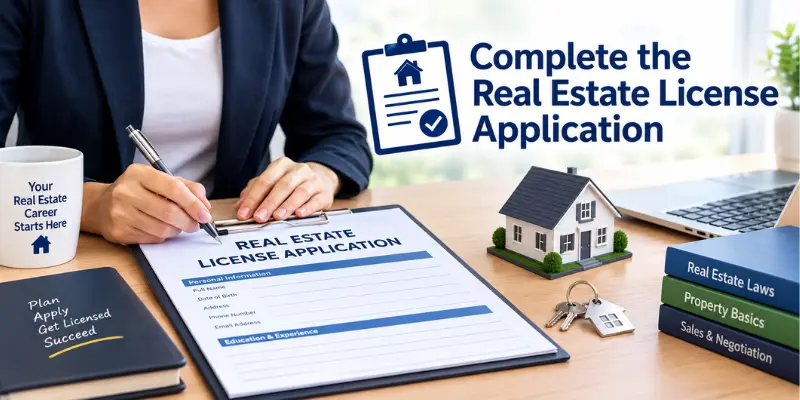
After meeting education and examination requirements, the next stage may involve submitting a real estate license application.
Depending on the jurisdiction, applicants may need to provide proof of education, examination results, identification, photographs, background information, or other documentation.
Some licensing authorities also require background checks.
Application and licensing fees vary, so candidates should use the current fee schedule published by their official regulatory authority rather than relying on outdated figures from third-party websites.
After receiving a license, agents must follow the applicable rules for maintaining, displaying, renewing, and using that license.
Choose a Real Estate Brokerage
In many markets, newly licensed agents work under or affiliate with a real estate brokerage.
A brokerage can provide a professional structure for conducting transactions, handling documentation, accessing systems, receiving supervision, and developing practical experience.
Choosing a brokerage should not be based only on brand recognition.
Consider the training available to new agents, commission structure, transaction support, technology, marketing resources, mentorship, office culture, fees, lead-generation opportunities, and expectations for agents.
A supportive brokerage can be especially valuable during the first year of a real estate career.
Ask questions before joining and understand which expenses you will be responsible for. A higher commission split is not necessarily better if the brokerage provides little training or transaction support.
Learn the Real Estate Market
A license gives you permission to perform permitted professional activities, but market knowledge helps you serve clients effectively.
Start by learning the market where you intend to work.
If you are new to the industry, you can first understand the fundamentals through our guide to what is real estate and then explore real estate meaning to strengthen your understanding of common industry terminology.
Study property prices, rental rates, neighborhoods, property types, recent transactions, development projects, infrastructure, transportation, local amenities, employment centers, and factors that influence demand.
You do not need to know every property in an entire city. Developing strong knowledge of a specific geographic area or property segment can be more practical for a new agent.
Some professionals specialize in first-time homebuyers, residential rentals, luxury homes, commercial properties, land, investment properties, or a particular neighborhood.
Specialization can help an agent develop expertise and communicate a clear professional value proposition.
Develop Essential Real Estate Agent Skills
Learning how to become a real estate agent involves more than completing licensing requirements. Long-term success depends heavily on professional skills.
Communication is one of the most important abilities because agents regularly interact with buyers, sellers, landlords, tenants, lenders, lawyers, inspectors, appraisers, contractors, developers, and other professionals.
Negotiation is another important skill. Agents need to understand client objectives, present information accurately, identify areas of agreement, and help parties work toward acceptable terms.
Organization is essential because real estate transactions can involve deadlines, appointments, contracts, documents, property information, and multiple parties.
Marketing skills are increasingly valuable because agents need to generate visibility for themselves and the properties they represent.
Technology skills can also improve productivity. Customer relationship management systems, digital calendars, electronic documents, online property platforms, social media, email marketing, virtual tours, and market-data tools can help agents manage their businesses.
Build a Professional Personal Brand
A new real estate agent needs a professional identity that makes it easy for potential clients to understand who they are and what services they provide.
Start with a professional profile, accurate contact information, a suitable photograph, and a clear description of your services.
A professional website can provide a central location where potential clients can learn about your market knowledge, services, property specialties, and contact information.
Social media can also support visibility when used professionally. Agents can publish useful information about neighborhoods, buying processes, market conditions, property maintenance, financing considerations, and common transaction questions.
The objective should be to become a useful source of information rather than relying entirely on promotional posts.
Consistent educational content can help demonstrate expertise and create opportunities for potential clients to discover your services.
Build a Client Network
Real estate is strongly relationship-driven.
A new agent may not have a large client database, so networking can be particularly important during the early stages of a career.
Professional relationships can include property owners, investors, lenders, lawyers, inspectors, contractors, developers, property managers, other agents, and local business professionals.
Referrals can become an important source of business over time.
Networking should focus on developing genuine professional relationships rather than pressuring people to buy or sell property.
A client who receives excellent service may recommend an agent to friends, family members, colleagues, or business contacts.
Maintaining relationships after a transaction can also create future opportunities.
Learn How Real Estate Transactions Work
New agents should understand the complete transaction process.
A typical residential sale may involve property preparation, listing, marketing, buyer inquiries, property viewings, offers, negotiations, contracts, financing, inspections, appraisal, title or legal work, closing, and transfer of ownership.
The exact process varies by country and jurisdiction.
Understanding the sequence helps agents identify deadlines and communicate effectively with clients.
Agents should also understand when another professional needs to be involved. A real estate agent should not present themselves as a lawyer, tax adviser, mortgage professional, surveyor, or other specialist unless they separately hold the appropriate qualification.
Maintaining professional boundaries protects both the agent and the client.
For readers interested in the wider business side of the industry, our guide to what is real estate business provides additional background.
Understand Real Estate Ethics and Professional Responsibilities
Trust is fundamental to a real estate career.
Agents handle sensitive information and may participate in transactions involving substantial financial commitments. Ethical conduct is therefore essential.
Professional responsibilities can include providing accurate information, protecting confidential client information, following applicable laws, avoiding misleading advertising, making required disclosures, and treating clients and other parties fairly.
Professional standards can vary by jurisdiction and professional organization.
In the United States, a REALTOR® is different from a licensed real estate agent. The National Association of REALTORS® explains that becoming a REALTOR® is a separate step after obtaining a real estate license and involves membership through a local REALTOR® association.
Not every licensed real estate agent is a REALTOR®
.
Start Generating Leads
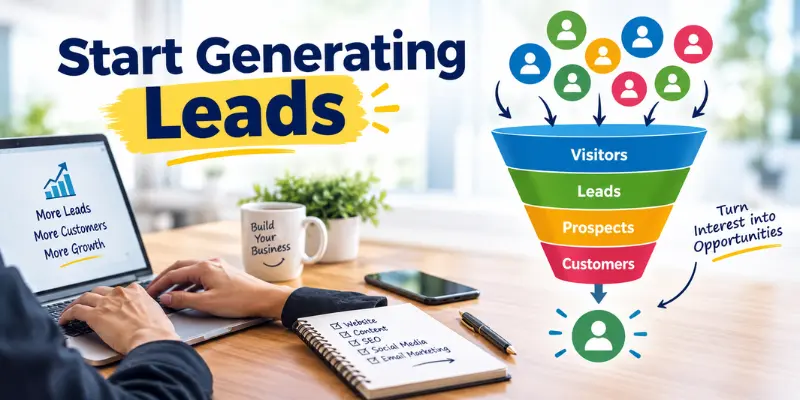
After completing the licensing process and joining a suitable brokerage, you need clients.
Lead generation can come from referrals, networking, online marketing, property portals, social media, open houses, community involvement, professional relationships, content marketing, email marketing, and other activities.
New agents should track their activities instead of relying on memory.
Maintain records of inquiries, calls, meetings, property viewings, follow-ups, referrals, and transactions.
Consistency is important because real estate income can be irregular, especially when compensation is commission-based. The BLS notes that earnings can be irregular, particularly for beginners, and that agents may sometimes go weeks or months without a sale.
A growing pipeline of potential clients can reduce dependence on a single transaction.
Continue Learning After Getting Licensed
Getting a license should be viewed as the beginning of professional education rather than the end.
Markets change. Regulations change. Technology changes. Consumer expectations change.
Continuing education can help agents remain current with laws, transaction practices, marketing techniques, technology, financing, and professional standards.
Some jurisdictions require continuing education for license renewal. In the United States, state requirements vary and licenses generally need periodic renewal.
Agents can also pursue additional certifications or designations where appropriate. These may help professionals develop expertise in residential sales, commercial real estate, investment property, property management, relocation, or other specialties.
How Much Does It Cost to Become a Real Estate Agent?
The cost of becoming a real estate agent depends heavily on location.
Potential expenses can include pre-licensing education, study materials, examination fees, license application fees, background checks, professional membership, brokerage fees, insurance, marketing, technology, transportation, and continuing education.
There is no reliable single global cost.
Someone researching how to become a real estate agent should prepare a complete starting budget rather than considering only the licensing fee.
A new agent may need money for professional photography, website hosting, business cards, advertising, transportation, phone service, software, and other business expenses.
Commission-based income can also take time to develop. Maintaining adequate financial reserves can be useful while building a client base.
How Long Does It Take to Become a Real Estate Agent?
There is no universal timeline.
The time required depends on the jurisdiction’s education requirements, examination schedule, application processing, background checks, brokerage requirements, and the candidate’s own pace.
Some candidates may complete the process within a few months, while others may take longer.
The best way to estimate your timeline is to obtain the official requirements from your local licensing authority and calculate the time required for each stage.
The objective should not be to rush through the process. Understanding the fundamentals can help prevent costly mistakes after entering the profession.
Do You Need a College Degree to Become a Real Estate Agent?
A college degree is not universally required.
Many jurisdictions have minimum education requirements such as a high school diploma or equivalent rather than a university degree. Requirements vary, so candidates should check the rules applicable to their intended market.
In the United States, the BLS lists a high school diploma or equivalent as the typical entry-level education for real estate brokers and sales agents.
Higher education can still be useful. Courses in business, finance, economics, marketing, communication, accounting, or law can provide knowledge that supports a real estate career.
Practical skills, licensing, market knowledge, communication, and professional experience remain highly relevant.
Is Real Estate a Good Career?
Real estate can be a rewarding career for people who enjoy sales, communication, networking, negotiation, and working independently.
There are several possible career paths. An individual may begin in residential sales and later specialize in luxury property, commercial real estate, investment property, leasing, property management, or brokerage.
Some professionals value the flexibility associated with real estate. Others are attracted by commission-based earning potential.
The career also has challenges.
Income can be irregular, particularly for new agents. Competition can be significant, and building a reliable client base may take time.
Work schedules can also vary. Clients may need assistance during evenings or weekends, and transactions can require attention outside traditional office hours. BLS likewise notes that many agents work irregular schedules and spend significant time networking.
Real estate can therefore suit people who are comfortable with relationship-building, self-management, uncertainty, and ongoing business development.
Common Mistakes New Real Estate Agents Make
New agents can make several avoidable mistakes.
One common mistake is focusing entirely on obtaining a license while neglecting practical skills. Passing an examination does not automatically prepare someone for client conversations, negotiations, marketing, and transaction management.
Another mistake is choosing a brokerage without comparing the available support, training, commission structure, and expenses.
Some new agents also expect immediate income. Building a reputation and client pipeline generally takes time.
Poor follow-up can create another problem. A potential client who does not receive a timely response may choose another professional.
Agents should also avoid providing legal, tax, financing, or technical advice outside their qualifications.
Inaccurate property information can damage professional credibility quickly. Important information should be verified before it is communicated to clients.
How to Become a Successful Real Estate Agent
Becoming licensed is only the first milestone. Long-term success requires a combination of knowledge, discipline, relationships, and client service.
Start by choosing a clear market focus. Learn the area and property types you want to serve.
Develop a consistent prospecting routine. Set daily or weekly goals for networking, follow-ups, content creation, client meetings, and lead generation.
Build a database of contacts and keep it organized.
Learn from experienced agents and professionals. A good mentor can help a new agent understand practical situations that cannot always be learned from textbooks.
Treat every client interaction professionally, even when a transaction does not immediately result in income.
Your reputation can become one of your most valuable professional assets.
Real Estate Agent vs REALTOR®
The terms real estate agent and REALTOR® are often used interchangeably, but they are not identical.
A real estate agent is generally a licensed professional who is legally authorized to perform certain real estate activities according to the rules of the relevant jurisdiction.
A REALTOR® is a real estate professional who is a member of the National Association of REALTORS® or the applicable REALTOR® organization.
According to the National Association of REALTORS®’ guide to becoming a REALTOR®, becoming a REALTOR® is a separate step from obtaining a real estate license and involves joining a local association of REALTORS®.
This distinction is important because not every licensed real estate agent is a REALTOR®.
Real Estate Agent vs Real Estate Broker
A real estate agent and broker can have different responsibilities depending on the jurisdiction.
Agents generally work directly with clients and conduct permitted real estate activities under the applicable licensing structure.
Brokers may have additional qualifications and responsibilities. In many jurisdictions, brokers can supervise agents, operate brokerage businesses, or perform additional transaction-related functions.
The BLS explains that U.S. sales agents must work with a real estate broker, while brokers can be licensed to manage their own real estate businesses.
The path to becoming a broker often involves additional education, examination, and professional experience.
For someone starting a career, becoming an agent can therefore be the first step toward a broader real estate career.
Career Growth After Becoming a Real Estate Agent

A real estate license can provide a foundation for several career directions.
An agent may remain focused on residential sales and develop a strong local client base.
Others may specialize in commercial properties, luxury homes, land, investment properties, rentals, or relocation services.
With experience and additional qualifications, some professionals move toward brokerage or management.
Others build real estate businesses that include teams of agents, property management services, investment activities, development, or consulting.
The best career path depends on personal interests, market opportunities, professional strengths, and long-term goals.
For readers interested in residential property specifically, our guide to what are residential properties can provide additional context.
Frequently Asked Questions About How to Become a Real Estate Agent
How do I become a real estate agent?
The general process involves checking local eligibility requirements, completing required real estate education, passing the licensing examination, submitting a license application, and meeting any brokerage or registration requirements. The exact process depends on your jurisdiction.
Can I become a real estate agent without a degree?
In many jurisdictions, a university degree is not required. However, minimum education requirements vary, so candidates should check the rules of the licensing authority where they intend to work.
How long does it take to become a real estate agent?
The timeline varies according to education requirements, examination schedules, application processing, and other local rules. Some candidates may complete the process in a few months, while others may take longer.
Is a real estate license required everywhere?
Licensing requirements vary internationally. In the United States, all states require real estate brokers and sales agents to be licensed, although specific requirements differ between states.
What skills do I need to become a real estate agent?
Communication, negotiation, organization, sales, marketing, customer service, networking, market research, technology, and time management are valuable skills.
Do real estate agents work independently?
Some agents operate with considerable independence, but licensing structures often require newly licensed agents to work under or affiliate with a brokerage. The exact arrangement depends on local regulations.
Can a real estate agent become a broker?
In many jurisdictions, agents can progress toward broker licensing after gaining the required experience and completing additional education and examinations. Requirements vary by location.
What is the difference between an agent and a REALTOR®?
A REALTOR® is a real estate professional who belongs to the relevant REALTOR® association. A licensed real estate agent does not automatically become a REALTOR®.
How do real estate agents find clients?
Agents can find clients through referrals, networking, online marketing, property portals, social media, open houses, community involvement, professional relationships, and other lead-generation activities.
Is real estate a good career for beginners?
It can be a good career for people who enjoy working with people, sales, negotiation, networking, and self-management. Income may be unpredictable during the early stages, and building a client base requires consistent effort.
Final Thoughts
Learning how to become a real estate agent starts with understanding the licensing and professional requirements of the market where you want to work. There is no single global licensing process, so candidates should verify current rules with the appropriate regulatory authority.
The general pathway involves checking eligibility, completing required education, preparing for and passing an examination, obtaining the appropriate license, choosing a suitable brokerage, learning the local market, and developing professional skills.
Getting licensed is only the beginning. Successful agents continue learning, build strong professional relationships, communicate honestly, follow applicable regulations, and provide meaningful value to their clients.
If you approach real estate as a long-term profession rather than simply a way to earn commissions, you can build knowledge, credibility, relationships, and a sustainable career over time.






- Be Respectful
- Stay Relevant
- Stay Positive
- True Feedback
- Encourage Discussion
- Avoid Spamming
- No Fake News
- Don't Copy-Paste
- No Personal Attacks
- Be Respectful
- Stay Relevant
- Stay Positive
- True Feedback
- Encourage Discussion
- Avoid Spamming
- No Fake News
- Don't Copy-Paste
- No Personal Attacks
