Rental Leasing: Complete Guide for Beginners, Tenants, and Landlords
Published: 18 Mar 2026
Rental leasing is one of the most important pillars of the real estate industry. Whether you are a tenant searching for a place to live, a landlord aiming to generate passive income, or an investor looking to maximize returns, understanding rental leasing is essential. It governs how properties are occupied, how agreements are structured, and how responsibilities are shared between parties through Rental Leasing Agreement
In today’s fast-moving property market, rental leasing is more than just signing a contract—it involves legal frameworks, financial planning, negotiation skills, and long-term strategy. From residential apartments to commercial office spaces, leasing plays a critical role in providing flexibility and accessibility without the need for ownership.
This comprehensive guide explores rental leasing in depth, covering its meaning, types, process, benefits, legal considerations, and expert tips to help you make informed decisions.
History of Rental Leasing
Rental leasing has a long and evolving history that dates back thousands of years. It has developed alongside human civilization as societies transitioned from nomadic lifestyles to settled communities.
Ancient Civilizations
The concept of leasing can be traced to ancient civilizations such as Mesopotamia, Egypt, and Rome. In these societies:
- Landowners leased agricultural land to farmers.
- Payments were often made in crops or livestock instead of money.
- Written agreements on clay tablets or papyrus documented leasing terms.
In Ancient Rome, leasing became more formalized. Roman law recognized lease agreements (known as locatio conductio), which defined the rights and responsibilities of landlords and tenants.
Medieval Period
During the Middle Ages:
- Feudal systems dominated land use.
- Lords leased land to peasants in exchange for labor or produce.
- Leasing was tied to social hierarchy rather than open markets.
This period laid the groundwork for structured tenancy systems.
Industrial Revolution
The 18th and 19th centuries marked a major shift:
- Rapid urbanization increased demand for housing.
- Rental leasing expanded from farmland to residential and commercial properties.
- Written contracts became more standardized.
Cities grew quickly, and leasing became essential for workers moving to urban areas.
Modern Era (20th Century)
In the 20th century:
- Governments introduced tenant protection laws.
- Lease agreements became legally enforceable documents.
- Real estate markets became more organized and regulated.
Leasing evolved into a formal business model, especially in commercial real estate.
Digital Age (21st Century)
Today, rental leasing is highly advanced:
- Online platforms list and manage properties.
- Digital contracts and e-signatures are common.
- Smart home technology and virtual tours enhance leasing experiences.
The evolution of rental leasing reflects changes in technology, law, and economic systems.
What is Rental Leasing?
Rental leasing refers to a legal agreement between a property owner (landlord) and a tenant, allowing the tenant to use and occupy a property for a specified period in exchange for regular payments, typically called rent.
The lease agreement outlines:
- Duration of the lease
- Monthly rent amount
- Security deposit
- Maintenance responsibilities
- Rules and restrictions
Unlike informal rental arrangements, leasing provides legal protection to both parties, ensuring clarity and reducing disputes.
How Rental Leasing Works
Rental leasing operates through a structured process that ensures clarity, legality, and mutual benefit for both landlords and tenants.
1. Property Listing
The landlord advertises the property through:
- Online platforms
- Real estate agents
- Social media or local listings
2. Tenant Application
Interested tenants submit applications that typically include:
- Personal details
- Employment and income proof
- Rental history
3. Tenant Screening
The landlord evaluates applicants based on:
- Creditworthiness
- Financial stability
- Background checks
4. Lease Agreement Creation
Once a tenant is selected, a lease agreement is drafted. It includes:
- Rent amount and due date
- Lease duration
- Security deposit
- Rules and obligations
5. Signing and Payment
The tenant signs the lease and pays:
- Security deposit
- First month’s rent
6. Move-In Process
The tenant takes possession of the property. A move-in inspection may be conducted to document the condition.
7. Ongoing Tenancy
During the lease period:
- Tenant pays rent regularly
- Landlord handles maintenance (as agreed)
- Both parties follow lease terms
8. Lease Renewal or Termination
At the end of the lease:
- It may be renewed
- Converted to month-to-month
- Or terminated with proper notice
Types of Rental Leasing
Rental leasing comes in various forms depending on the duration, purpose, and terms of the agreement.
1. Residential Lease
This is the most common type, used for homes, apartments, and condos. Typically ranges from 6 months to 1 year.
2. Commercial Lease
Used for offices, retail stores, and warehouses. These leases are often longer and more complex.
3. Short-Term Lease
Usually lasts less than 6 months. Ideal for temporary stays or flexible living arrangements.
4. Long-Term Lease
Typically lasts 1–5 years or more, offering stability for both tenant and landlord.
5. Month-to-Month Lease
Automatically renews every month until either party terminates it. Offers flexibility but less security.
6. Sublease
Occurs when a tenant rents out the property (or part of it) to another person, with landlord approval.
Key Components of a Lease Agreement
A well-structured lease agreement is the backbone of rental leasing. Here are the essential elements:
1. Parties Involved
Clearly identifies the landlord and tenant.
2. Property Description
Includes address, unit number, and any included amenities.
3. Lease Duration
Specifies start and end dates.
4. Rent Details
Includes rent amount, due date, and payment methods.
5. Security Deposit
Covers potential damages or unpaid rent.
6. Maintenance Responsibilities
Defines who is responsible for repairs and upkeep.
7. Terms and Conditions
Includes rules regarding pets, smoking, noise, and occupancy.
8. Termination Clause
Explains how and when the lease can be ended.
Rental Leasing Process Step-by-Step
Step 1: Property Listing
Landlords advertise the property through online platforms, agents, or local listings.
Step 2: Tenant Search and Screening
Potential tenants apply, and landlords verify:
- Income
- Credit history
- Rental history
Step 3: Property Viewing
Tenants inspect the property before making a decision.
Step 4: Lease Negotiation
Both parties agree on rent, lease duration, and conditions.
Step 5: Signing the Lease
The agreement is signed, and the tenant pays the security deposit and first rent.
Step 6: Move-In
Tenant takes possession of the property.
Step 7: Ongoing Management
Includes rent collection, maintenance, and communication.
Benefits of Rental Leasing
For Tenants
- Flexibility to relocate
- No property ownership costs
- Access to better locations
- Lower upfront investment
For Landlords
- Regular income stream
- Property value appreciation
- Tax benefits (in many regions)
- Long-term financial security
For Investors
- Passive income generation
- Portfolio diversification
- Inflation hedge
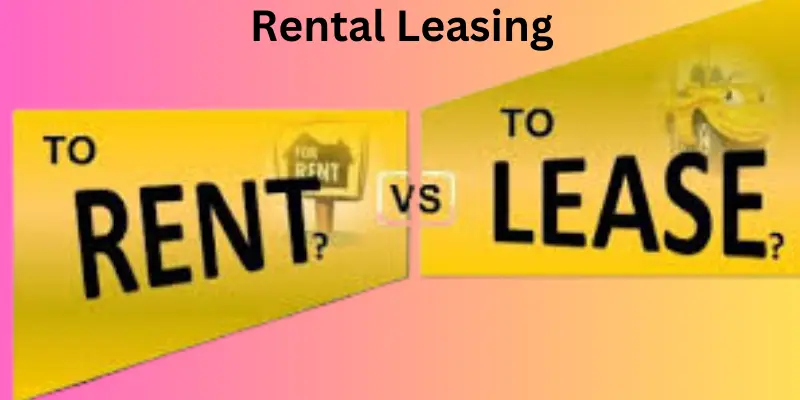
Rental Leasing vs Renting (Key Difference)
| Aspect | Rental Leasing | Renting |
|---|---|---|
| Duration | Fixed-term (e.g., 1 year) | Usually short-term or flexible |
| Agreement | Formal legal contract | Can be informal or short-term |
| Stability | High | Low |
| Flexibility | Limited | High |
| Rent Changes | Fixed during lease | Can change frequently |
Legal Aspects of Rental Leasing
Understanding legal requirements is crucial to avoid disputes and ensure compliance.
1. Lease Agreement Legality
The lease must comply with local laws and regulations.
2. Tenant Rights
Tenants typically have rights such as:
- Right to privacy
- Safe living conditions
- Protection from unfair eviction
3. Landlord Rights
Landlords have rights to:
- Receive rent on time
- Inspect property with notice
- Evict tenants for violations
4. Security Deposit Regulations
Many regions have laws controlling how deposits are handled and returned.
5. Eviction Laws
Evictions must follow legal procedures and cannot be arbitrary
Costs Involved in Rental Leasing
For Tenants
- Monthly rent
- Security deposit
- Utility bills
- Maintenance fees
- Moving costs
For Landlords
- Property maintenance
- Taxes
- Insurance
- Management fees
- Vacancy costs
Tips for Tenants
1. Read the Lease Carefully
Never sign without understanding all terms.
2. Inspect the Property
Check for damages and document them.
3. Understand Your Rights
Be aware of local tenant laws.
4. Negotiate When Possible
You may negotiate rent or lease terms.
5. Maintain Good Communication
Build a positive relationship with your landlord.
Tips for Landlords
1. Screen Tenants Thoroughly
Verify income and background to reduce risk.
2. Use a Clear Lease Agreement
Avoid ambiguity in terms and conditions.
3. Maintain the Property
Regular upkeep increases tenant satisfaction.
4. Set Competitive Rent
Research market rates before setting rent.
5. Keep Records
Maintain documentation of payments and agreements.
Common Mistakes to Avoid
For Tenants
- Ignoring lease terms
- Delaying rent payments
- Not documenting property condition
For Landlords
- Poor tenant screening
- Ignoring maintenance issues
- Lack of proper documentation
Rental Leasing Trends in 2026
1. Digital Leasing Platforms
Online applications, e-signatures, and virtual tours are becoming standard.
2. Flexible Leasing Options
Short-term and hybrid leases are gaining popularity.
3. Smart Home Features
Properties with smart technology attract more tenants.
4. Co-Living Spaces
Shared living arrangements are increasing, especially in urban areas.
5. Sustainability Focus
Energy-efficient homes are in high demand.
Rental Leasing for Investment Strategy
Rental leasing is a powerful tool for building wealth through real estate.
Key Strategies
- Buy-to-let investments
- Long-term residential leasing
- Commercial leasing for higher returns
- Short-term rentals for higher flexibility
Risks to Consider
- Vacancy periods
- Market fluctuations
- Maintenance costs
- Legal disputes
How to Choose the Right Lease Type
| Situation | Recommended Lease Type |
|---|---|
| Temporary relocation | Short-term lease |
| Long-term stability | Fixed-term lease |
| Frequent moving | Month-to-month lease |
| Business setup | Commercial lease |
Future of Rental Leasing
The future of rental leasing is shaped by technology, urbanization, and changing lifestyles. As more people prefer flexibility over ownership, leasing will continue to grow.
Key future developments include:
- AI-based tenant screening
- Blockchain lease contracts
- Smart property management systems
- Increased demand for flexible housing
Comparison of Rental Leasing with Others
| Feature | Rental Leasing | Renting | Buying Property | Subleasing |
|---|---|---|---|---|
| Ownership | Landlord owns property | Landlord owns property | Buyer owns property | Original tenant holds lease |
| Agreement Type | Formal, fixed-term contract | Often short-term or flexible | Purchase agreement | Agreement between tenant & subtenant |
| Duration | Medium to long-term | Usually short-term | Permanent | Short-term or temporary |
| Stability | High | Low | Very high | Moderate |
| Flexibility | Limited | High | Low | Moderate |
| Upfront Cost | Moderate (deposit + rent) | Low | Very high (down payment) | Low to moderate |
| Legal Protection | Strong | Moderate | Strong | Depends on lease terms |
| Control Over Property | Limited | Limited | Full control | Very limited |
| Financial Benefit | No ownership gain | No ownership gain | Builds equity | No ownership gain |
| Risk Level | Low to moderate | Low | High (market risks) | Moderate |
Advanced Legal Frameworks of Rental Leasing (USA, UK, UAE)
Understanding rental leasing laws in different countries is essential, especially for investors, expats, and international landlords. Each country has its own legal structure, tenant protections, and regulatory systems. Below is a detailed overview of advanced legal frameworks in the United States, United Kingdom, and United Arab Emirates.
1. Rental Leasing Laws in the United States
The United States has a decentralized legal system, meaning rental laws vary by state and city. However, there are federal laws that apply nationwide.
Key Federal Laws
- Fair Housing Act
Prohibits discrimination based on race, religion, gender, disability, or family status. - Americans with Disabilities Act
Requires accessibility accommodations for tenants with disabilities. - Uniform Residential Landlord and Tenant Act
Provides a model legal framework adopted by many states.
State-Level Regulations
Each state sets rules for:
- Rent control (e.g., strict in California, limited elsewhere)
- Security deposit limits
- Eviction procedures
- Notice periods
Tenant Rights in the U.S.
- Right to habitable housing
- Protection against unlawful eviction
- Privacy rights (landlords must give notice before entry)
Landlord Obligations
- Maintain safe living conditions
- Follow legal eviction procedures
- Return security deposits within a specified timeframe
Eviction Process
Evictions in the U.S. must follow strict legal steps:
- Notice to tenant
- Filing in court
- Court hearing
- Legal eviction order
2. Rental Leasing Laws in the United Kingdom
The United Kingdom has a well-structured and tenant-friendly rental system, primarily governed by housing acts.
Key Legal Frameworks
- Housing Act 1988
Introduced the Assured Shorthold Tenancy (AST), the most common lease type. - Landlord and Tenant Act 1985
Defines landlord responsibilities for repairs and maintenance. - Tenant Fees Act 2019
Bans most tenant fees and caps security deposits.
Types of Tenancies
- Assured Shorthold Tenancy (AST)
- Assured Tenancy
- Periodic Tenancy
Tenant Rights in the UK
- Protection from unfair eviction
- Right to a safe and well-maintained property
- Deposit protection in government-approved schemes
Deposit Protection Schemes
Landlords must register deposits in schemes like:
- Deposit Protection Service
Eviction Rules
- Section 21 Notice (no-fault eviction)
- Section 8 Notice (for tenant breach)
Recent reforms aim to limit “no-fault evictions” and strengthen tenant security.
3. Rental Leasing Laws in the United Arab Emirates
The United Arab Emirates, particularly Dubai, has a highly regulated rental market designed to protect both landlords and tenants.
Key Legal Authorities
- Real Estate Regulatory Agency
Governs rental laws and regulations in Dubai. - UAE Tenancy Law
Regulates landlord-tenant relationships.
Ejari System
- Mandatory registration system for all rental contracts
- Ensures legal validity and transparency
- Managed by Ejari System
Rent Regulation
- Rent increases are controlled by RERA’s rental index
- Landlords must provide 90 days’ notice for rent changes
Tenant Rights in UAE
- Protection from arbitrary eviction
- Right to renew lease (in many cases)
- Access to dispute resolution centers
Eviction Rules
Landlords can evict tenants only for specific reasons such as:
- Non-payment of rent
- Property sale
- Personal use (with notice)
Dispute Resolution
Handled by:
- Rental Dispute Settlement Centre
Key Differences Between USA, UK, and UAE
| Feature | USA | UK | UAE |
|---|---|---|---|
| Legal System | Federal + State | Centralized | Centralized (Emirate-based) |
| Rent Control | Limited (varies by state) | Generally market-driven | Regulated by RERA index |
| Deposit Rules | State-specific | Strict protection schemes | Flexible but regulated |
| Eviction Process | Court-based | Legal notices required | Regulated with strict conditions |
| Tenant Protection | Moderate to strong | Strong | Strong (especially in Dubai) |
| Contract Registration | Not mandatory nationwide | Not mandatory | Mandatory (Ejari) |
Final Insight
Each country offers a unique approach to rental leasing:
- The United States provides flexibility but varies widely by state.
- The United Kingdom emphasizes tenant protection and transparency.
- The United Arab Emirates focuses on regulation and digital systems like Ejari for efficiency.
For investors and tenants, understanding these frameworks is crucial to avoiding legal issues and making informed real estate decisions.
FAQs on Rental Leasing
1. What is the difference between rental leasing and renting?
Rental leasing usually involves a fixed-term legal agreement (e.g., 1 year), while renting is often more flexible and short-term with fewer formal commitments.
2. Can a lease agreement be terminated early?
Yes, but it depends on the terms of the lease. Early termination may involve penalties unless both parties agree or special conditions apply.
3. What is a security deposit in rental leasing?
A security deposit is an upfront payment made by the tenant to cover potential damages or unpaid rent. It is usually refundable at the end of the lease.
4. Who is responsible for maintenance?
Maintenance responsibilities are defined in the lease agreement. Generally, landlords handle major repairs, while tenants manage minor upkeep.
5. Can rent increase during a lease period?
In most fixed-term leases, rent cannot be increased until the lease expires, unless stated otherwise in the agreement.
6. What happens when a lease ends?
At the end of a lease, tenants can:
- Renew the lease
- Move out
- Continue on a month-to-month basis (if allowed)
Summary
Rental leasing is a structured and legally binding way for tenants to occupy properties while providing landlords with a steady income stream. It offers flexibility, financial opportunities, and security for both parties. Understanding lease types, legal requirements, and best practices can help avoid common pitfalls and maximize benefits.
Conclusion
Rental leasing is a cornerstone of modern real estate, offering practical solutions for housing and business needs. Whether you are renting your first apartment or managing a portfolio of properties, mastering the principles of rental leasing is essential.
By understanding the process, legal framework, and market trends, you can make smarter decisions and achieve your financial or lifestyle goals. As the real estate landscape continues to evolve, rental leasing will remain a vital and dynamic part of it.





- Be Respectful
- Stay Relevant
- Stay Positive
- True Feedback
- Encourage Discussion
- Avoid Spamming
- No Fake News
- Don't Copy-Paste
- No Personal Attacks
- Be Respectful
- Stay Relevant
- Stay Positive
- True Feedback
- Encourage Discussion
- Avoid Spamming
- No Fake News
- Don't Copy-Paste
- No Personal Attacks
