Types of Residential Properties in India: A Complete Guide for Homebuyers and Investors
Published: 08 Jul 2026
India’s real estate market has grown rapidly over the last decade, offering buyers an impressive variety of housing options. Whether someone is purchasing a first home, investing in rental income, or upgrading to a luxury lifestyle, understanding the types of residential properties available is the first step toward making an informed decision.
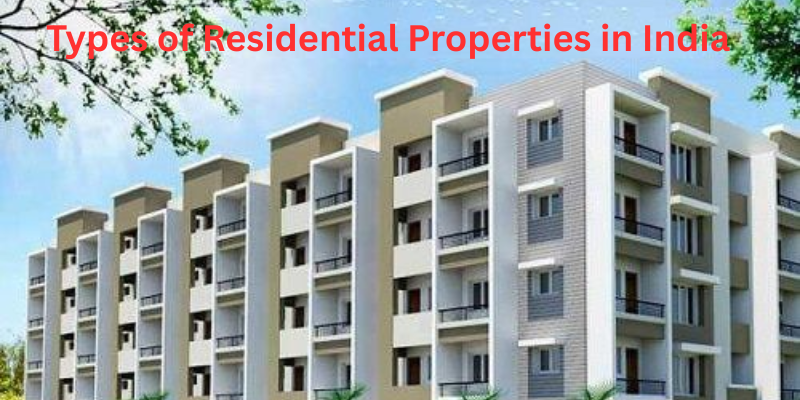
Residential property is more than a physical structure. It represents financial security, long-term wealth creation, and personal comfort. Every property category serves a different purpose depending on location, budget, family size, lifestyle, and investment objectives. Choosing the wrong property can lead to unnecessary maintenance costs, limited appreciation, or legal complications. Understanding the strengths and limitations of each residential category helps buyers make smarter financial decisions.
India’s residential sector includes affordable apartments, independent houses, luxury villas, duplex homes, penthouses, studio apartments, farmhouses, retirement communities, gated societies, and many other housing formats. Each property type offers unique ownership rights, amenities, maintenance responsibilities, and resale potential.
This comprehensive guide explains the most popular types of residential properties in India, helping buyers, investors, and first-time homeowners understand which option best suits their goals.
Understanding Types of Residential Properties in India
Residential properties are buildings or land developed primarily for living purposes. Unlike commercial properties that generate business income directly, residential properties provide accommodation for individuals and families.
Indian residential real estate has evolved significantly with urbanization, improved infrastructure, rising incomes, and government housing initiatives. Buyers today have access to numerous property configurations ranging from compact city apartments to luxurious countryside villas.
Several factors influence residential property selection, including:
- Budget
- Family requirements
- Employment location
- Future appreciation
- Rental income
- Lifestyle preferences
- Legal ownership
- Maintenance expenses
- Builder reputation
- Connectivity
Understanding these factors before investing minimizes financial risks and improves long-term satisfaction.
Why Understanding Types of Residential Properties Matters Before Buying
Many buyers focus only on price while overlooking property classification. This often leads to purchasing a property that does not match future requirements.
Understanding different residential property categories helps buyers:
- Compare investment opportunities.
- Estimate maintenance costs.
- Evaluate resale value.
- Understand ownership rights.
- Identify appreciation potential.
- Select properties suitable for rental income.
- Choose homes matching lifestyle needs.
- Avoid legal disputes.
Knowledge of residential classifications also assists banks during home loan approvals because lending policies often vary according to property type.
Independent House
One of the oldest and most preferred types of residential properties is the independent house.
An independent house is a standalone residential building constructed on privately owned land. The owner possesses both the building and the land beneath it.
Independent houses are especially popular in Tier-2 and Tier-3 Indian cities where land availability remains relatively higher than metropolitan areas.
Advantages include complete privacy, freedom for renovation, future expansion possibilities, personal parking, and ownership of land that generally appreciates over time.
Owners may add additional floors after obtaining local authority approvals.
These houses are attractive for families seeking long-term residence without sharing common walls or facilities.
Challenges include higher maintenance responsibilities, increased construction costs, independent security arrangements, and larger utility expenses.
Independent homes generally appreciate significantly in prime urban locations because land values continue increasing.
Apartment
Apartments remain the fastest-growing types of residential properties in India due to rapid urbanization.
An apartment consists of one residential unit within a multi-story building where multiple families share common amenities.
Modern apartment complexes include:
- Elevators
- Parking
- Clubhouses
- Swimming pools
- Gyms
- Children’s play areas
- Landscaped gardens
- CCTV surveillance
- Power backup
- Community halls
Apartment ownership typically includes the internal unit while common facilities are jointly owned by residents through housing societies.
Apartments suit working professionals, nuclear families, senior citizens, and first-time buyers due to convenience and lower maintenance responsibilities.
Builders increasingly offer affordable, premium, luxury, and ultra-luxury apartment categories across Indian cities.
Affordable Housing Apartments
Affordable housing has become one of India’s fastest-growing residential segments.
Government initiatives have encouraged developers to construct economical housing projects aimed at middle-income and lower-income families.
Affordable apartments typically offer:
- Functional layouts
- Basic amenities
- Lower maintenance
- Government incentives
- Better financing options
- Good resale demand
Although unit sizes may be smaller, affordability remains the primary advantage.
These projects are often located in suburban areas experiencing infrastructure development.
Luxury Apartments
Luxury apartments represent premium urban living.
These residential units provide larger floor plans, superior construction quality, imported materials, premium interiors, concierge services, advanced security systems, and lifestyle amenities.
Luxury apartment projects commonly include:
- Rooftop lounges
- Business centers
- Smart home automation
- Private elevators
- High-speed lifts
- Infinity pools
- Sports courts
- Spa facilities
- Landscaped podiums
Luxury developments are concentrated in metropolitan cities where affluent buyers seek convenience alongside premium living standards.
Studio Apartment
Studio apartments are compact residential units combining bedroom, living room, and kitchen into one open space.
The bathroom remains separate.
Studio apartments have become increasingly popular among:
- Students
- Young professionals
- Single occupants
- Frequent travelers
- Rental investors
Advantages include lower purchase prices, affordable maintenance, easier furnishing, and attractive rental demand.
Studio apartments are especially common in metropolitan areas where property prices are significantly higher.
Although limited in size, modern interior design maximizes functionality.
Duplex House
A duplex house consists of two floors connected internally through a staircase.
Unlike apartments, duplex homes create the experience of living in an independent house while maintaining efficient use of land.
Common layouts include:
Ground Floor:
- Living room
- Dining area
- Kitchen
- Guest room
Upper Floor:
- Bedrooms
- Family lounge
- Balcony
Duplex properties provide greater privacy by separating common and private living spaces.
Families preferring spacious interiors often select duplex homes over conventional apartments.
Triplex House
Triplex houses extend the duplex concept by incorporating three interconnected floors.
These homes are typically found in premium residential neighborhoods.
Triplex layouts allow clear separation of entertainment, family, and private areas.
Large families appreciate the flexibility offered by multiple floors.
Although construction costs are higher, triplex homes provide substantial living space on limited land parcels.
Villa
Among premium types of residential properties, villas remain one of the most desirable choices.
A villa is an independent luxury residence located within a planned residential community.
Unlike standalone houses, villas often benefit from professionally managed infrastructure.
Villa communities typically include:
- Security gates
- Internal roads
- Clubhouse
- Sports facilities
- Landscaped gardens
- Walking tracks
- Community parks
- Visitor parking
Luxury villas provide spacious interiors, private gardens, balconies, terraces, and dedicated parking.
Many new villa developments integrate smart home technologies and environmentally sustainable construction.
Row House
Row houses consist of multiple similar residential units constructed in a continuous row.
Each unit shares side walls with neighboring houses while maintaining separate entrances.
Row houses combine affordability with many benefits of independent living.
They usually include:
- Personal parking
- Small garden
- Multiple bedrooms
- Terrace
- Private entrance
Maintenance costs remain lower compared to independent houses because infrastructure is often managed collectively.
Row houses have become increasingly popular in suburban housing developments.
Townhouse
Townhouses resemble row houses but generally include more premium architectural designs and better community amenities.
They are frequently developed within gated communities.
Townhouses balance affordability and luxury while maximizing available land.
Residents enjoy private ownership combined with organized community management.
Many professionals prefer townhouses because they provide larger living spaces than apartments without requiring extensive maintenance.
Bungalow
A bungalow is traditionally a spacious independent residential building occupying a large land parcel.
Bungalows are usually associated with luxury, privacy, and architectural uniqueness.
Features often include:
- Large gardens
- Wide verandas
- Multiple parking spaces
- Separate servant quarters
- Spacious interiors
- Private lawns
Older Indian cities still contain prestigious bungalow neighborhoods where land appreciation has been remarkable.
Despite higher purchase prices, bungalows remain symbols of premium residential ownership.
Penthouse
Penthouses occupy the highest floor of luxury apartment buildings.
They offer panoramic city views, larger floor areas, private terraces, premium interiors, and exclusive amenities.
Luxury buyers often choose penthouses for privacy and prestige.
Modern penthouses may include:
- Private swimming pools
- Outdoor entertainment decks
- Personal elevators
- Smart automation
- Home offices
- Premium security
Due to limited availability, penthouses often command significantly higher prices than standard apartments.
Builder Floor Apartment
Builder floors have become increasingly popular across Indian metropolitan regions.
A builder floor consists of one residential unit occupying an individual floor within a low-rise building.
Ownership generally includes a proportional land share.
Advantages include:
- Greater privacy
- Fewer neighbors
- Better ventilation
- Independent entrances
- Lower maintenance
Builder floors appeal to buyers seeking independent living without purchasing an entire standalone property.
Residential Plots
Some buyers prefer purchasing land instead of ready-built homes.
Residential plots provide complete flexibility regarding architectural design, construction timeline, and future expansion.
Benefits include:
- Full customization
- Better appreciation potential
- Construction flexibility
- Lower initial investment
- Long-term wealth creation
However, buyers must carefully verify legal documentation, zoning approvals, title clarity, and infrastructure availability before investing.
Residential Farmhouse
Farmhouses combine residential comfort with agricultural surroundings.
Originally built for farming activities, modern farmhouses increasingly serve as luxury weekend homes.
Common farmhouse features include:
- Open landscapes
- Gardens
- Organic farming areas
- Recreational spaces
- Large outdoor seating
Farmhouses are generally located outside crowded urban centers, offering peaceful environments.
Condominium (Condo)
Although apartments dominate the Indian housing market, condominiums have gained popularity in major metropolitan cities. A condominium is similar to an apartment, but ownership and management are organized differently. Individual owners hold title to their residential units, while common facilities such as gardens, clubhouses, elevators, parking areas, and recreational spaces are jointly owned and managed through an association.
Condominiums appeal to buyers looking for premium amenities with professionally maintained infrastructure. They usually provide enhanced security, landscaped surroundings, and well-maintained common areas, making them one of the increasingly preferred types of residential properties for urban families.
Gated Community Homes
A gated community is a residential development enclosed by security boundaries with controlled entry and exit points. These projects can include apartments, villas, row houses, duplex homes, or townhouses.
Modern gated communities have become highly desirable because they provide both security and lifestyle benefits.
Common amenities include:
- 24/7 security
- CCTV surveillance
- Landscaped parks
- Clubhouse
- Swimming pool
- Children’s playground
- Jogging tracks
- Indoor sports
- Visitor parking
- Community halls
Families with children and senior citizens often prefer gated communities due to improved safety and organized neighborhood management.
Senior Citizen Residential Communities
India’s growing elderly population has increased demand for retirement-oriented housing.
Senior living communities are specially designed residential projects offering comfortable accommodation for older adults. These developments emphasize accessibility, healthcare support, security, and social interaction.
Typical facilities include:
- Medical assistance
- Emergency response systems
- Barrier-free construction
- Recreational activities
- Housekeeping
- Community dining
- Walking paths
These communities enable senior citizens to maintain independence while receiving essential support whenever required.
Serviced Apartments
Serviced apartments combine residential living with hotel-style facilities.
They are fully furnished accommodations available for short-term or long-term stays.
Facilities commonly include:
- Housekeeping
- Reception services
- Internet connectivity
- Laundry
- Security
- Parking
- Kitchen appliances
Business professionals, expatriates, corporate employees, and medical tourists frequently choose serviced apartments because they provide home-like comfort alongside hospitality services.
Investors also consider serviced apartments attractive because of their rental income potential.
Co-Living Spaces
Co-living has emerged as an innovative residential concept in India’s major cities.
These shared accommodations provide private bedrooms while common facilities such as kitchens, dining areas, workspaces, and recreational zones are shared among residents.
Young professionals, students, freelancers, and digital workers often prefer co-living spaces due to affordability and convenience.
Benefits include:
- Lower rental costs
- Fully furnished rooms
- Utility management
- Community living
- Flexible lease terms
As urban migration continues, co-living remains one of the fastest-growing residential housing models.
Vacation Homes
Vacation homes are residential properties purchased primarily for leisure rather than permanent residence.
Popular tourist destinations across India have witnessed increasing demand for second homes.
Owners generally use these properties during holidays while renting them out during the remaining months.
Vacation homes often include:
- Scenic surroundings
- Resort-style amenities
- Recreational facilities
- Landscaped gardens
- Premium interiors
Investment returns largely depend upon tourism demand and property location.
Weekend Homes
Weekend homes resemble vacation properties but are generally located within a few hours’ driving distance from major cities.
Families use these residences for relaxation away from urban congestion.
Weekend homes commonly feature:
- Spacious outdoor areas
- Gardens
- Farm-style landscapes
- Swimming pools
- Entertainment spaces
Growing interest in work-life balance has significantly increased demand for weekend residential properties.
Residential Property Based on Ownership
Apart from physical construction styles, the types of residential properties can also be categorized according to ownership structure.
Ownership determines legal rights, transfer procedures, financing eligibility, taxation, and resale opportunities.
Major ownership categories include:
- Freehold property
- Leasehold property
- Cooperative housing
- Joint ownership
Understanding ownership classification helps buyers avoid future legal complications.
Freehold Residential Property
Freehold property provides complete ownership of both land and building.
Owners enjoy full legal rights to:
- Sell
- Renovate
- Transfer
- Mortgage
- Inherit
Freehold ownership is generally considered the most secure form of residential ownership.
Banks also prefer financing freehold properties due to reduced legal complexity.
Leasehold Residential Property
Leasehold ownership grants possession of property for a fixed duration while the underlying land remains owned by another authority.
Lease periods commonly extend from several decades to nearly a century.
Before purchasing leasehold property, buyers should verify:
- Remaining lease duration
- Renewal conditions
- Transfer restrictions
- Government approvals
Properties with shorter lease periods may experience reduced resale demand.
Cooperative Housing Society
Many apartment projects in India operate under cooperative housing societies.
Residents collectively manage maintenance, security, repairs, financial planning, and common facilities.
Advantages include:
- Democratic management
- Shared maintenance costs
- Community participation
- Better infrastructure upkeep
Prospective buyers should review society rules before purchasing property.
Joint Ownership Residential Property
Joint ownership allows multiple individuals to purchase residential property together.
Common examples include:
- Husband and wife
- Parents and children
- Business partners
- Siblings
Joint ownership improves affordability and loan eligibility while distributing financial responsibilities.
Proper legal documentation clearly defines ownership percentages and succession rights.
Residential Property Classification Based on Construction Status
Another useful method for understanding types of residential properties involves construction stage.
Construction status directly influences pricing, financing, possession timeline, and investment returns.
Primary categories include:
- Ready-to-move properties
- Under-construction properties
- Newly launched projects
- Resale properties
Each category offers distinct financial advantages and potential risks.
Ready-to-Move Residential Property
Ready-to-move homes are completed residential units available for immediate possession.
Advantages include:
- No construction delays
- Immediate occupancy
- Visible construction quality
- Existing neighborhood
- Faster rental income
Buyers can inspect the finished property before making a purchase decision.
These homes generally command higher prices than under-construction projects.
Under-Construction Residential Property
Under-construction projects are properties still being developed.
Benefits include:
- Lower purchase prices
- Flexible payment plans
- Better appreciation potential
- Wider unit selection
However, buyers should carefully evaluate the developer’s credibility, financial stability, regulatory approvals, and project timeline.
Resale Residential Property
Resale homes have previously been owned by another individual.
Many buyers choose resale properties because they are located in established neighborhoods with developed infrastructure.
Advantages include:
- Immediate availability
- Mature surroundings
- Existing schools
- Healthcare facilities
- Shopping centers
- Public transport
Legal verification remains essential before completing resale transactions.
New Launch Residential Projects
New launch projects represent the earliest stage of residential development.
Builders frequently offer attractive introductory pricing, flexible payment options, and promotional benefits during launch.
Investors often prefer these projects because of potential appreciation before project completion.
Thorough verification of approvals and developer reputation is essential before booking.
Residential Properties Based on Lifestyle
Lifestyle expectations increasingly influence housing decisions.
Modern buyers evaluate residential properties according to convenience, sustainability, wellness, and community living.
Popular lifestyle-oriented residential developments include:
- Smart homes
- Eco-friendly housing
- Luxury communities
- Wellness-focused developments
- Mixed-use residential complexes
These categories continue expanding across India’s metropolitan regions.
Smart Homes
Smart homes integrate advanced technologies that improve convenience, security, and energy efficiency.
Features may include:
- Smart lighting
- Voice-controlled devices
- Automated curtains
- Digital door locks
- Remote surveillance
- Energy monitoring
- Smart climate control
Technology-focused buyers increasingly prefer smart residential developments for enhanced comfort and operational efficiency.
Eco-Friendly Residential Properties
Environmental awareness has encouraged developers to construct sustainable residential communities.
Green residential projects often include:
- Rainwater harvesting
- Solar energy
- Waste management
- Energy-efficient lighting
- Green landscaping
- Water conservation systems
These developments reduce environmental impact while lowering long-term operating costs.
Luxury Residential Communities
Luxury residential communities provide premium lifestyle experiences beyond traditional housing.
Residents enjoy exclusive facilities including:
- Concierge services
- Private clubs
- Business lounges
- Wellness centers
- Fine landscaping
- Sports facilities
- Multi-layer security
- Premium architecture
These developments attract high-net-worth individuals seeking both comfort and prestige.
Mixed-Use Residential Developments
Mixed-use residential developments combine housing with commercial and lifestyle facilities within the same project.
These developments usually include:
- Residential towers
- Retail shops
- Restaurants
- Offices
- Entertainment areas
- Community spaces
The main advantage of mixed-use projects is convenience. Residents can access essential services without traveling long distances.
In major Indian cities where traffic congestion is a significant concern, mixed-use communities have become increasingly popular. They represent modern types of residential properties designed around convenience, connectivity, and efficient urban living.
Affordable Housing Projects Under Government Schemes
Affordable housing has received significant attention in India due to increasing demand for economical homes.
Government-supported housing initiatives aim to provide better residential opportunities for middle-income and economically weaker sections.
Affordable housing projects generally focus on:
- Lower-cost apartments
- Basic amenities
- Efficient space utilization
- Better infrastructure connectivity
- Easier home financing
These developments are particularly common in developing urban areas where land availability allows large-scale construction.
EWS and LIG Housing
Economically Weaker Section (EWS) and Lower Income Group (LIG) housing projects are designed to make homeownership accessible for families with limited financial resources.
These residential properties generally offer compact units with essential facilities.
Important features include:
- Affordable pricing
- Government assistance
- Basic community facilities
- Planned layouts
- Access to public infrastructure
Such projects play an important role in reducing housing shortages in rapidly growing cities.
High-Rise Residential Buildings
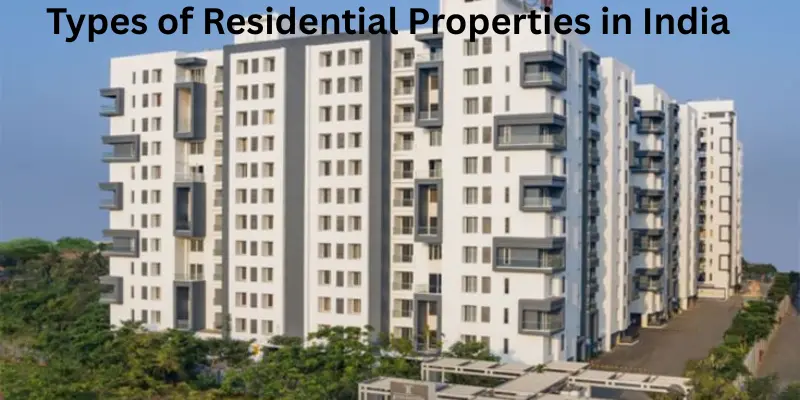
High-rise buildings are among the most common types of residential properties in densely populated Indian cities.
These buildings maximize land utilization by providing multiple floors of residential units.
Advantages include:
- Better city connectivity
- Modern amenities
- Security systems
- Community living
- Efficient land usage
High-rise developments are particularly common in cities such as Mumbai, Bengaluru, Delhi NCR, Hyderabad, Chennai, and Pune.
However, buyers should evaluate factors such as elevator capacity, fire safety systems, structural quality, and maintenance costs before purchasing.
Low-Rise Residential Buildings
Low-rise residential buildings generally contain fewer floors and fewer housing units compared to high-rise towers.
They offer:
- Greater privacy
- Better ventilation
- Lower dependency on elevators
- Easier accessibility
Many families prefer low-rise developments because they provide a quieter living environment.
These properties are common in suburban areas where land availability is relatively higher.
Mid-Rise Residential Buildings
Mid-rise buildings provide a balance between high-rise apartments and low-rise developments.
Typically ranging from several floors, these properties offer modern amenities without the density associated with very tall buildings.
Benefits include:
- Comfortable community size
- Efficient maintenance
- Better natural light
- Convenient access
Mid-rise housing has become increasingly popular among urban buyers seeking balanced living environments.
How to Choose the Right Types of Residential Properties in India
Selecting the right property requires careful evaluation of personal requirements, financial capability, and long-term objectives.
Buyers should consider the following factors before investing:
Budget and Financial Planning
The first step in selecting among different types of residential properties is determining a realistic budget.
Buyers should calculate:
- Down payment requirements
- Home loan eligibility
- Monthly EMI capacity
- Registration charges
- Maintenance expenses
- Future repair costs
A property should provide financial comfort rather than create excessive financial pressure.
Location and Connectivity
Location remains one of the most important factors affecting residential property value.
A good residential location usually provides access to:
- Schools
- Hospitals
- Shopping centers
- Public transport
- Employment hubs
- Roads and highways
Properties located near upcoming infrastructure projects often experience stronger appreciation potential.
Purpose of Purchase
The ideal property type depends on the purpose of purchase.
Different buyers have different objectives:
For Self-Residence
Families usually prioritize:
- Space
- Safety
- Nearby facilities
- Community environment
- Long-term comfort
For Investment
Investors generally focus on:
- Rental demand
- Capital appreciation
- Market growth
- Future development
For Retirement
Senior buyers may prefer:
- Healthcare access
- Peaceful surroundings
- Low maintenance
- Security
Builder Reputation and Project Quality
The developer’s reputation significantly influences property value.
Before buying, buyers should research:
- Previous projects
- Construction quality
- Delivery record
- Customer reviews
- Legal compliance
- Financial stability
Reliable builders generally provide better construction standards and smoother ownership experiences.
Legal Verification Before Buying Residential Property
Legal checking is one of the most important steps in purchasing any residential property.
Buyers should verify:
- Property title documents
- Land ownership records
- Building approvals
- Occupancy certificate
- Completion certificate
- Encumbrance certificate
- Registration documents
A qualified legal professional can help identify potential risks before purchase.
Importance of RERA Registration
The Real Estate (Regulation and Development) Act has improved transparency in India’s real estate sector.
Before investing, buyers should verify whether the project is registered with the appropriate state real estate regulatory authority.
RERA registration helps buyers access information related to:
- Project approvals
- Completion timelines
- Developer details
- Construction progress
It provides greater protection against unfair practices.
Residential Property Investment Potential in India
Residential real estate remains one of India’s preferred investment options due to long-term wealth creation opportunities.
Different types of residential properties provide different investment advantages.
Apartments may offer strong rental demand in urban locations, while land-based properties often benefit from long-term appreciation.
Factors influencing investment returns include:
- Location growth
- Infrastructure development
- Employment opportunities
- Population growth
- Market demand
- Property quality
Investors should analyze local market conditions before making decisions.
Rental Income Potential of Residential Properties
Many investors purchase residential properties to generate rental income.
Rental demand is influenced by:
- Nearby workplaces
- Educational institutions
- Transportation facilities
- Population growth
- Lifestyle preferences
Apartments, studio homes, and serviced apartments often attract strong rental demand in metropolitan cities.
Future Trends in Indian Residential Real Estate
The residential property sector in India continues evolving due to changing consumer expectations and technological development.
Future housing trends include:
- Smart residential communities
- Sustainable buildings
- Flexible living spaces
- Senior-friendly housing
- Integrated townships
- Digital property management
Buyers increasingly seek homes that provide convenience, security, environmental responsibility, and improved quality of life.
Common Mistakes to Avoid When Buying Residential Property
Many buyers make mistakes because they focus only on appearance and pricing.
Common mistakes include:
- Ignoring legal verification
- Buying without checking location growth
- Overlooking maintenance expenses
- Choosing unreliable builders
- Not reviewing property documents
- Ignoring future family requirements
Proper research helps buyers select the most suitable residential property.
Difference Between Residential Property Types and Their Suitability
Different housing options serve different needs.
| Property Type | Best Suitable For |
|---|---|
| Apartment | Urban families and professionals |
| Villa | Luxury lifestyle seekers |
| Independent House | Buyers seeking privacy |
| Studio Apartment | Singles and rental investors |
| Duplex | Large families |
| Row House | Families wanting community living |
| Plot | Long-term investors |
| Farmhouse | Weekend living |
| Serviced Apartment | Corporate and temporary residents |
| Senior Community | Elderly homeowners |
Future of Types of Residential Properties in India
India’s residential real estate sector is expected to continue expanding due to urban migration, rising incomes, and infrastructure development.
The demand for diverse housing options will continue increasing as buyers look for properties matching their lifestyle, financial goals, and family requirements.
From affordable apartments to luxury villas, every category of residential property has a specific role in India’s growing housing market.
Understanding the different types of residential properties enables buyers and investors to make informed decisions, reduce risks, and select homes that provide long-term value.
A successful property purchase requires careful planning, market research, legal verification, and understanding of personal needs. With the right approach, residential real estate can provide both comfortable living and sustainable financial growth.






- Be Respectful
- Stay Relevant
- Stay Positive
- True Feedback
- Encourage Discussion
- Avoid Spamming
- No Fake News
- Don't Copy-Paste
- No Personal Attacks
- Be Respectful
- Stay Relevant
- Stay Positive
- True Feedback
- Encourage Discussion
- Avoid Spamming
- No Fake News
- Don't Copy-Paste
- No Personal Attacks
