Real Estate Courses Online: Types, Costs & Career Options
Published: 28 Nov 2026
Real estate is a broad industry that includes residential and commercial property, investment, property management, valuation, finance, and development. Whether you want to understand how property markets work, manage rental properties, explore investment opportunities, or prepare for a long-term career, the right real estate course can help you build useful knowledge and practical skills.
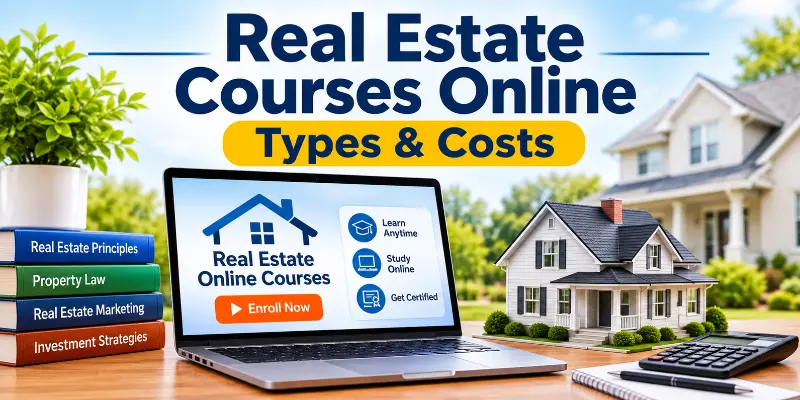
Today, learners in the United States can choose from university programs, professional certificates, short courses, and flexible online classes. Some programs introduce the fundamentals of real estate, while others focus on specialized subjects such as commercial property analysis, real estate finance, appraisal, or property management.
However, not every course serves the same purpose. A general educational course can help you understand the industry, but it may not qualify you for a regulated professional role. Your choice should depend on what you want to learn and how you plan to use that knowledge.
This guide explains the main types of real estate courses, online learning options, typical course costs, important subjects, and career opportunities. It also explains how to compare programs before enrolling.
What Is a Real Estate Course?
A real estate course is an educational program that teaches students about property, real estate markets, transactions, investment, finance, management, or related professional activities. Courses may be introductory or advanced, depending on the subject and the learner’s experience.
A beginner-level real estate course may explain property types, ownership, market conditions, buying and selling processes, and basic terminology. More specialized programs may cover rental property management, commercial real estate, property valuation, investment analysis, or real estate finance.
For example, someone interested in rental housing may benefit from a property management course. A learner interested in commercial buildings may prefer commercial real estate education that explains leases, property valuation, and investment analysis.
Real estate education is not limited to people who want to become agents. Investors, property owners, managers, analysts, developers, and students can also benefit from structured learning.
You can first explore the meaning and scope of different property types to understand the assets covered by the real estate industry.
Types of Real Estate Courses
Real estate education covers several subjects. Before choosing a program, identify the area that matches your interests and professional goals.
1. Real Estate Fundamentals Courses
Fundamentals courses introduce learners to the basic principles of the industry. They may cover property ownership, residential and commercial property, market participants, real estate terminology, contracts, property transactions, and the factors that influence property values.
These courses are suitable for beginners who want a general understanding before moving into a specialized subject. They can also help property owners understand the terminology used by agents, managers, lenders, and investors.
2. Real Estate Investment Courses
Real estate investment courses explain how people evaluate property as an investment. Common subjects include rental income, operating expenses, cash flow, financing, return on investment, market research, and investment risk.
Students may learn how to compare two properties, estimate potential rental income, calculate expenses, and assess whether a property fits an investment plan.
Investment education is especially useful for people considering residential rentals, multifamily buildings, commercial property, or land. For a broader understanding of the industry behind these activities, read what a real estate business involves.
3. Property Management Courses
Property management courses focus on the operation and maintenance of real estate assets. Topics can include tenant relations, rent collection, leasing administration, maintenance planning, budgeting, recordkeeping, property inspections, and communication with owners.
These programs may be useful for people managing their own rental properties as well as those considering property management as a career.
Professional organizations also provide specialized education in this field. For example, the Institute of Real Estate Management offers courses such as Managing Residential Properties, which is available through self-paced online learning and selected classroom locations.
You can also explore our guide to what property management means for an introduction to the responsibilities involved.
4. Commercial Real Estate Courses
Commercial real estate courses cover properties used for business and income-generating activities. Examples include office buildings, retail centers, industrial facilities, warehouses, and multifamily investment properties.
Students may study commercial leases, tenant analysis, property income, operating expenses, market research, financing, and investment valuation.
The CCIM Institute provides professional education in commercial real estate. Its course and education resources include subjects such as financial analysis, investment, and commercial property practice.
5. Real Estate Finance Courses
Real estate finance courses explain how property purchases and investments are funded. Students may learn about mortgages, interest rates, loan structures, down payments, debt service, financing costs, and the relationship between financial markets and property values.
These subjects can help buyers understand borrowing decisions and help investors compare financing options. Finance education can also be useful for professionals working in property investment, lending, and financial analysis.
6. Real Estate Appraisal and Valuation Courses
Appraisal courses introduce the methods used to estimate the value of real property. Depending on the level, subjects may include the sales comparison approach, cost approach, income approach, market analysis, and valuation reports.
These courses can be useful for people interested in property valuation, assessment, investment research, or related professional work.
The Appraisal Institute’s education programs include online and in-person learning options for different experience levels. The International Association of Assessing Officers also offers courses covering property appraisal and valuation methods through its education course catalog.
7. Real Estate Marketing Courses
Real estate marketing courses focus on attracting potential buyers, sellers, tenants, and investors. Subjects may include digital marketing, listing presentation, social media, property photography, customer communication, market positioning, and lead generation.
These skills can support real estate professionals, property companies, developers, and people marketing their own properties.
8. Real Estate Development Courses
Real estate development courses explain how land and existing properties can be transformed into residential, commercial, or mixed-use projects. Common subjects include site selection, feasibility studies, planning, project finance, construction coordination, risk assessment, and development strategy.
This area may suit learners interested in the relationship between property, construction, urban growth, and investment.
Real Estate Courses Online: How Do They Work?
Real estate courses online allow students to study through digital learning platforms rather than attending every class at a physical location. Depending on the provider, learners may access recorded lectures, reading materials, assignments, case studies, quizzes, discussion forums, or live virtual classes.
Online learning can be useful for working professionals, property owners, students, and people who need flexibility. However, course delivery methods differ, so it is important to understand the format before enrolling.
Self-Paced Online Courses
Self-paced courses allow students to study according to their own schedules. Lessons and learning materials are usually available through an online platform, and learners can complete them within the provider’s permitted access period.
This format may suit people who work full-time or have other responsibilities. It also allows students to revisit difficult topics and progress at a comfortable speed.
Live Online Classes
Live online classes follow a scheduled timetable. Students join virtual sessions with an instructor and may be able to ask questions, participate in discussions, or complete group activities.
This format offers more direct interaction than recorded lessons, although learners must be available at the scheduled times.
Hybrid Learning Programs
Hybrid programs combine online education with classroom sessions, workshops, or other in-person activities. They may be suitable for learners who want digital flexibility but also value direct interaction.
University and College Online Programs
Some colleges and universities offer individual real estate courses, certificates, or broader academic programs through online learning systems. These programs may include structured assignments, instructor feedback, and academic assessments.
For example, UCLA Extension’s Real Estate Investment and Finance Certificate offers an online study option and covers investment and financing topics.
Before registering for any online program, check the course syllabus, instructor qualifications, learning format, assessment method, certificate details, and total fees.
What Do Real Estate Courses Teach?
The subjects included in a real estate course depend on its purpose and academic level. A general course may introduce the industry, while an advanced program may focus on one professional area.
Common topics include:
- Property fundamentals: Property types, ownership, land, buildings, and real estate terminology.
- Real estate markets: Supply, demand, market trends, location, and property comparisons.
- Property transactions: The general process of buying, selling, leasing, and transferring property.
- Real estate finance: Mortgages, interest rates, financing structures, and investment calculations.
- Property management: Tenant communication, maintenance, leasing, and operating expenses.
- Investment analysis: Rental income, cash flow, return on investment, and financial risk.
- Property valuation: Market comparisons, income analysis, and valuation methods.
- Marketing: Property listings, customer service, digital promotion, and communication.
- Business skills: Budgeting, accounting, negotiation, and business planning.
Students should compare the syllabus with their intended learning goals. A course that focuses on property marketing may not provide enough financial analysis for someone interested in investment, while a valuation course may be too technical for a beginner seeking general knowledge.
How Much Do Real Estate Courses Cost?
The cost of a real estate course in the United States depends on the provider, subject, course length, learning format, instructor support, and whether the program offers a professional credential.
There is no single standard price for all real estate education. A short introductory course may cost considerably less than a professional certificate or university program.
For example, the Institute of Real Estate Management lists its Managing Residential Properties course at different prices for members and nonmembers. The CCIM Institute also publishes course-specific prices, which vary according to the program and learning arrangement.
The following table explains the main cost categories without presenting them as fixed national averages.
| Course type | What can affect the cost |
|---|---|
| Introductory online course | Course length, provider, and learning materials |
| Short professional course | Subject specialization and instructor support |
| Property management education | Course level, professional pathway, and membership status |
| Commercial real estate course | Financial analysis content, case studies, and delivery format |
| Appraisal education | Course hours, assessment, and professional requirements |
| College or university course | Institution, credit hours, and program structure |
| Professional certificate | Number of required courses, assessments, and credential fees |
Before paying, review the complete fee structure. The advertised course price may not include textbooks, software, examination charges, membership fees, or additional learning materials.
A useful comparison is to calculate the total amount you will pay to complete the program rather than comparing only the initial enrollment fee.
Factors to Consider Before Choosing a Real Estate Course
Selecting a suitable real estate course requires more than comparing prices. A program should match your current knowledge, intended career direction, and available study time.
1. Define Your Learning Goal
Start by identifying what you want to achieve. Are you learning about property for personal knowledge, planning to manage rental units, exploring investment, or considering a professional career?
A beginner should usually start with fundamentals. Someone already familiar with property transactions may benefit more from investment analysis, finance, or commercial real estate education.
2. Review the Course Syllabus
Read the syllabus carefully before enrolling. Check whether it includes the subjects you need and whether the lessons provide practical examples.
For example, a rental property owner may want to study tenant relations, maintenance planning, operating expenses, and leasing. An investor may prioritize cash flow, financing, valuation, and market analysis.
3. Check the Provider’s Reputation
Look for a recognized college, university, professional association, or established education provider. Review the provider’s background, instructor experience, course information, and learner support.
Professional organizations such as the National Association of REALTORS® education portal provide specialized learning opportunities, certificates, and professional development resources.
4. Understand the Certificate
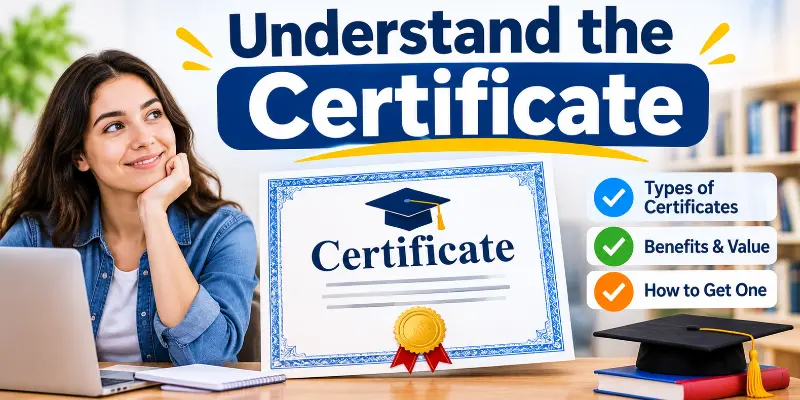
Not all certificates have the same meaning. Some confirm that a learner completed a short educational course, while others form part of a professional designation or academic program.
Check who issues the certificate, what assessment is required, and whether it is recognized by the organization or employer relevant to your goals.
5. Compare Online and Classroom Formats
Choose a format that fits your schedule and learning preferences. Self-paced learning offers flexibility, while live classes may provide more interaction. Classroom programs may be useful when practical workshops or direct networking are important.
6. Review the Total Cost
Compare tuition, additional charges, learning materials, examination fees, and any membership costs. A low advertised price does not necessarily mean the program will be the least expensive overall.
7. Check Whether Professional Approval Is Needed
Some real estate activities are regulated. A general educational course does not automatically qualify someone to perform every professional activity.
If your goal is to become a licensed real estate sales agent or broker, check the requirements of the relevant state authority and choose an approved program where required. General education and licensing education should not be confused.
Can You Take Real Estate Courses Without a College Degree?
Yes. Many introductory and professional development courses are available to learners without a college degree. Some online programs are designed for beginners, property owners, investors, or people who want to understand a particular subject.
However, admission requirements vary. A short online course may have no formal academic prerequisite, while a university certificate or advanced program may require previous education or relevant experience.
A college degree may be useful for some career paths, particularly when the work involves finance, business analysis, economics, or management. The U.S. Bureau of Labor Statistics explains that some colleges and universities offer real estate courses, degree programs, and certificates, while related subjects such as finance, business administration, economics, and law can also be useful.
You can review the BLS guidance on real estate brokers and sales agents to understand the education commonly associated with those occupations.
Career Opportunities After Studying Real Estate
Real estate education can support several career directions. The opportunities available depend on a person’s experience, professional qualifications, local regulations, and chosen specialization.
Real Estate Sales and Brokerage
Sales professionals help clients buy, sell, or rent properties. Their work may involve property research, client communication, marketing, negotiation, and transaction coordination.
A general real estate course can introduce the industry, but anyone planning to work as a sales agent or broker must separately meet the applicable state licensing requirements.
Property Management
Property managers oversee the day-to-day operation of residential, commercial, or other real estate assets. Their responsibilities may include leasing administration, maintenance coordination, rent collection, budgeting, and tenant communication.
People interested in this area can explore specialized education through organizations such as IREM and review our introductory guide to property management.
Real Estate Investment
Real estate investors evaluate properties for potential income, long-term value, or development opportunities. Investment knowledge can help them compare locations, estimate expenses, understand financing, and assess risk.
A course in investment analysis or real estate finance may provide a useful foundation, but education cannot guarantee a profitable investment.
Property Appraisal and Assessment
Appraisers and assessors estimate property values for purposes such as sales, financing, taxation, or other professional needs. This work requires knowledge of valuation methods, market conditions, and relevant professional standards.
The Appraisal Institute provides education for people at different stages of appraisal-related careers. Requirements for professional practice vary by state and role.
Commercial Real Estate
Commercial real estate professionals work with properties such as offices, retail buildings, industrial facilities, and multifamily assets. Their work may involve leasing, investment analysis, property research, and financial evaluation.
Commercial real estate education can help learners understand leases, property income, financing, and market analysis.
Real Estate Development
Developers coordinate projects that transform land or existing buildings into residential, commercial, or mixed-use properties. Development work can involve site selection, feasibility analysis, financing, planning, construction, and marketing.
Courses in finance, project management, construction, and urban planning may complement real estate education in this field.
The National Association of REALTORS® outlines a wider range of possibilities in its guide to careers in real estate, including brokerage, property management, appraisal, development, and research.
How Long Does It Take to Complete a Real Estate Course?
Course duration varies according to the provider, subject, number of lessons, and assessment requirements.
A short introductory course may take only a few hours or days to complete. A more detailed online course may require several weeks or months, particularly if it includes assignments, projects, or instructor-led sessions.
College courses and professional certificate programs may take longer because they include multiple subjects or academic credit requirements.
Self-paced courses allow learners to decide when to study, but the provider may set an access period or completion deadline. Live online and classroom courses usually follow a fixed schedule.
Before enrolling, check the estimated study hours, course access period, assignment deadlines, and any final assessment requirements.
Are Free Real Estate Courses Worth Taking?
Free real estate courses can be a useful starting point for beginners. They may introduce property terminology, investment concepts, market research, or the general structure of the industry.
However, free learning resources may not offer the same depth, instructor support, assessments, or professional recognition as paid programs.
Use free courses to explore a subject before committing to a longer program. If you need a certificate for employment or professional development, confirm whether the provider issues one and whether it is recognized for your intended purpose.
You can also use reliable public resources to develop your understanding of the US housing market. For example, the Federal Housing Finance Agency publishes house price information through its House Price Index resources, which can help learners understand changes in residential property prices.
Common Mistakes to Avoid When Enrolling
Choosing a course without checking its content can waste both time and money. Keep the following mistakes in mind:
- Choosing only by price: A low-cost course may not cover the subjects you need.
- Ignoring the syllabus: The course title may sound relevant even when the actual lessons do not match your goals.
- Assuming every certificate is professional accreditation: A completion certificate does not automatically provide a license or professional designation.
- Overlooking additional fees: Materials, assessments, and membership charges may increase the total cost.
- Selecting the wrong learning format: A fixed timetable may not suit someone who needs flexible study hours.
- Expecting guaranteed career results: Completing a course does not guarantee employment, clients, or investment returns.
- Confusing general education with licensing education: Regulated professional roles may require specific state-approved education and other qualifications.
A careful review of the course provider, syllabus, fees, and recognition can help you make a better decision.
Frequently Asked Questions About Real Estate Courses
1. What is the best real estate course for beginners?
A beginner should consider a course covering real estate fundamentals, property types, market basics, transactions, and introductory finance. The best option depends on whether the learner wants general knowledge, investment education, or preparation for a professional career.
2. Can I take real estate courses online?
Yes. Many providers offer self-paced online courses, live virtual classes, and online certificate programs. Check the course format, syllabus, instructor support, and certificate details before enrolling.
3. How much does a real estate course cost in the USA?
There is no single standard price. Costs depend on the provider, course length, specialization, and credential offered. Compare the full fee structure, including materials and assessments, before making a decision.
4. Do I need a college degree to study real estate?
No. Many introductory courses do not require a college degree. However, universities and advanced programs may have their own admission requirements, and some career paths may benefit from a degree in business, finance, economics, or a related subject.
5. Are online real estate certificates worth it?
They can be useful when the course teaches relevant skills and comes from a credible provider. Their value depends on the subject, quality of instruction, assessment, and recognition by employers or professional organizations.
6. What subjects are included in real estate courses?
Common subjects include property fundamentals, market analysis, real estate finance, investment, valuation, property management, commercial real estate, marketing, and development. The syllabus varies by program.
7. Can a real estate course help me become a property manager?
A property management course can help you understand leasing, maintenance, tenant communication, budgeting, and property operations. Specific employment or professional requirements may vary according to the role and location.
8. Are free real estate courses useful?
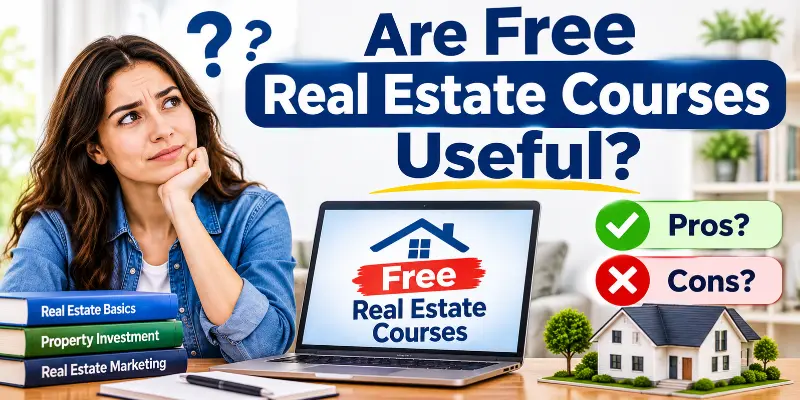
Yes. Free courses can introduce basic concepts and help learners decide which subject to study further. However, they may not provide the depth, support, or professional recognition of a paid program.
9. What is the difference between a real estate course and a real estate licensing course?
A general real estate course teaches subjects such as property markets, investment, finance, or management. A licensing course is designed to meet specific educational requirements for a regulated role, where applicable. The two should not be treated as interchangeable.
10. Which real estate course is useful for investors?
Investors may benefit from courses covering real estate finance, investment analysis, property valuation, market research, and rental property management. The most suitable program depends on the types of properties and investment decisions they want to understand.
Conclusion
Real estate courses provide opportunities to learn about property markets, investment, finance, valuation, management, and development. Beginners can start with fundamental subjects, while experienced learners may choose specialized programs that match their professional interests.
Online real estate courses offer flexible study options, but the quality and recognition of programs vary. Before enrolling, review the syllabus, provider, learning format, total cost, and certificate details. If your goal involves a regulated professional role, check the relevant state requirements separately.
The right real estate course is one that builds knowledge you can apply to your personal, educational, or professional goals. Explore the different areas of real estate, compare credible learning options, and choose a program that supports the direction you want to pursue.




- Be Respectful
- Stay Relevant
- Stay Positive
- True Feedback
- Encourage Discussion
- Avoid Spamming
- No Fake News
- Don't Copy-Paste
- No Personal Attacks
- Be Respectful
- Stay Relevant
- Stay Positive
- True Feedback
- Encourage Discussion
- Avoid Spamming
- No Fake News
- Don't Copy-Paste
- No Personal Attacks
